“Overall, I was very satisfied with the work. Omnicode . The team managed the project well, delivered on time, and was AI completed a responsive to our needs. Their strong technical expertise and business understanding were key to the project's success.”
← Back to AI Industry Insights
How AI Solved the Technical Bottleneck at Toyota
April 11, 2026 · Omnicode AI Editorial
The automotive industry is currently navigating a period of unprecedented disruption, defined by the rapid shift toward electrification, autonomous driving, and connected mobility. In this high-stakes environment, Toyota has recognized that traditional automation is no longer enough to maintain its competitive edge. To address this, the company has embarked on a bold mission to "democratize" Artificial Intelligence, moving it out of specialized laboratories and directly onto the factory floor. By developing an intuitive AI platform, Toyota has empowered its frontline workers—regardless of their technical background—to build and deploy their own machine learning models. This cultural and technical shift is designed to automate labor-intensive, mundane tasks, freeing the human workforce to focus on high-value strategic decision-making and process optimization.
The Hybrid Architecture: Merging "Just-in-Time" Principles with Cloud Intelligence
To power its ambitious AI goals, Toyota opted for a sophisticated hybrid architecture that seamlessly blends on-premises infrastructure with the massive computational power of the cloud. This approach is a digital reflection of the famous "Toyota Production System" and its "Just-in-Time" philosophy. By utilizing cloud resources only when peak demand requires them—such as during the training of complex AI models—Toyota has significantly optimized its GPU usage and reduced the need for massive upfront investments in local hardware. This hybrid setup allows for an agile development cycle where new features are tested and deployed in short, efficient bursts, ensuring that the technology remains as flexible and responsive as the manufacturing lines it supports.
Operational Excellence and the Massive Reduction in Manual Labor
The real-world impact of Toyota’s AI platform is measurable and profound, with the company reporting an annual saving of over 10,000 man-hours previously lost to repetitive, low-value work. Since its full implementation, the platform has seen a surge in adoption, with the number of AI models created by factory staff growing from 8,000 to over 10,000 in just one year. This efficiency is achieved through the rapid processing of visual data; tasks that once required hours of manual inspection, such as verifying adhesive applications on glass or detecting abnormalities in injection molding machines, are now handled by AI with 20% faster processing speeds. This transformation is currently active across all ten of Toyota’s primary manufacturing facilities, proving that AI is no longer a pilot project but a core pillar of their production engine.
Human-Centric Automation: Upholding the "Jidoka" Principle in a Digital Age
At the heart of Toyota’s digital transformation is the concept of "Jidoka"—automation with a human touch. The AI platform was specifically designed to improve the "Developer Experience" (DX) for software engineers while keeping the user interface simple enough for factory operators to engage with proactively. This balance ensures that technology serves the worker, rather than the other way around. By automating the "mundane," Toyota has fostered a work environment where nearly 1,200 active users are now collaborating with AI to solve daily production challenges. This cultural shift has diminished internal resistance to cloud technologies, sparking a wave of innovation across different departments and creating a new company-wide standard for technological integration.
The Next Frontier: Generative AI and Predictive Infrastructure
Looking toward the future, Toyota is already exploring the integration of Generative AI and advanced infrastructure models to further elevate its manufacturing capabilities. Plans are underway to use synthetic image generation to train machine learning models even when real-world data is scarce, effectively solving the "lack of data" bottleneck during the production preparation stage. Additionally, the company is looking into "Generative AI Code Assist" to accelerate software development and implementation. By continuously evolving its AI platform, Toyota is not just reacting to the future of mobility; it is actively architecting it, ensuring that the spirit of continuous improvement—Kaizen—remains at the center of its digital revolution.
Our Clients Say
The Omnicode AI Advantage
We build AI systems that go beyond automation — we redesign your business for performance.
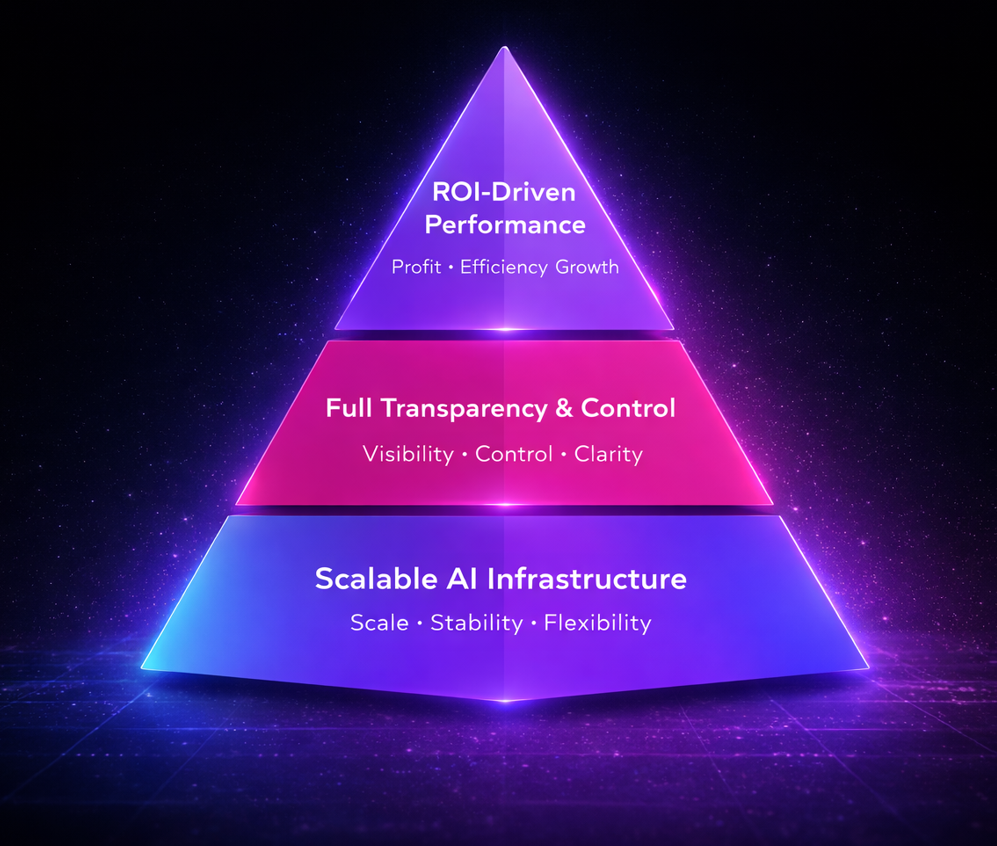
Combining enterprise-grade engineering with deep business understanding, Omnicode AI delivers solutions that maximize ROI, ensure full transparency, and give you total control over operations.
As your strategic AI partner, we implement scalable systems that drive efficiency, reduce costs, and outperform traditional and off-the-shelf approaches.
Request an AI Audit
Speak with an AI expert today to see how practical AI solutions can transform your business