“Overall, I was very satisfied with the work. Omnicode . The team managed the project well, delivered on time, and was AI completed a responsive to our needs. Their strong technical expertise and business understanding were key to the project's success.”
← Back to AI Industry Insights
How AI and HVI Integration Solved the Equipment Failure Challenge at Caterpillar
April 11, 2026 · Omnicode AI Editorial
In the demanding realm of heavy machinery, operational efficiency and equipment longevity are the primary pillars of financial success. For decades, the industry relied on reactive or scheduled maintenance, but for a global leader like Caterpillar, the stakes are too high for guesswork. The integration of AI-powered predictive maintenance with Heavy Vehicle Inspection (HVI) technology represents a groundbreaking shift in fleet management. By combining real-time telematics with digitalized inspection data, Caterpillar fleet owners can now anticipate structural, hydraulic, and engine failures with surgical precision. This proactive synergy ensures that maintenance is no longer a response to an emergency, but a pre-planned strategic intervention that secures the operational life of every asset.
The Strategic Convergence of Real-Time Telematics and Digitalized Inspection
Predictive maintenance for Caterpillar equipment is no longer limited to basic sensor monitoring; it has evolved into a sophisticated ecosystem where IoT sensors and data analytics assess machinery health in real-time. By tracking critical parameters—such as engine load, hydraulic pressure, and vibration harmonics—AI can identify the earliest signs of component degradation. The integration of HVI enhances this process by adding a layer of detailed physical diagnostic capabilities that traditional methods often miss. This dual approach allows operators to identify wear and tear across engines, cooling systems, and undercarriages, ensuring that service is scheduled during non-operational hours. The result is a drastic reduction in unplanned downtime and a significant mitigation of the high costs associated with major breakdowns.
Extending Asset Lifespan: Measurable Gains through Integrated Diagnostics
The most profound impact of combining AI predictive insights with HVI technology is the measurable extension of equipment lifespan. Real-world case studies, specifically involving Caterpillar excavators and loaders, have demonstrated that this integrated approach can extend the operational life of heavy machinery by approximately 20%. By detecting issues at an early stage—such as microscopic cracks in metal components or subtle thermal anomalies in the hydraulics—HVI provides the "ground truth" that validates AI predictions. This precision allows for timely, less expensive preventive repairs that maintain the equipment in optimal condition, effectively pushing the boundaries of traditional asset longevity and providing a superior return on investment for construction and mining enterprises.
Overcoming the Technical Hurdles of Industrial Digital Transformation
While the benefits of AI and HVI integration are substantial, the transition to this digital model involves navigating complex implementation challenges. Success hinges on the seamless integration of IoT sensors with existing fleet management software and the continuous upskilling of technical staff. The initial investment in high-performance hardware and software is often justified by the long-term savings; a comprehensive cost-benefit analysis reveals that the reduction in emergency repair bills and the prevention of catastrophic system failures far outweigh the startup costs. By collaborating with experienced vendors and focusing on data hygiene, Caterpillar equipment owners can successfully overcome these hurdles, transforming their maintenance operations into a self-monitoring, highly efficient infrastructure.
The Future of Heavy Machinery: Toward Fully Autonomous and Self-Healing Fleets
As we move toward the next decade, the synergy between AI, big data, and HVI technology is set to revolutionize the industrial landscape. Emerging trends in machine learning will allow for even more accurate "what-if" scenario planning, where the system can simulate how specific environmental stressors—such as extreme heat or heavy workloads—will affect individual components. This evolution toward "self-healing" fleets, where the machinery autonomously flags its own maintenance needs and coordinates with supply chains for parts, is becoming a reality. By reducing the carbon footprint through optimized energy usage and extending the life of existing machinery, predictive maintenance is not only a tool for profitability but also a critical component of global industrial sustainability and energy security.
Our Clients Say
The Omnicode AI Advantage
We build AI systems that go beyond automation — we redesign your business for performance.
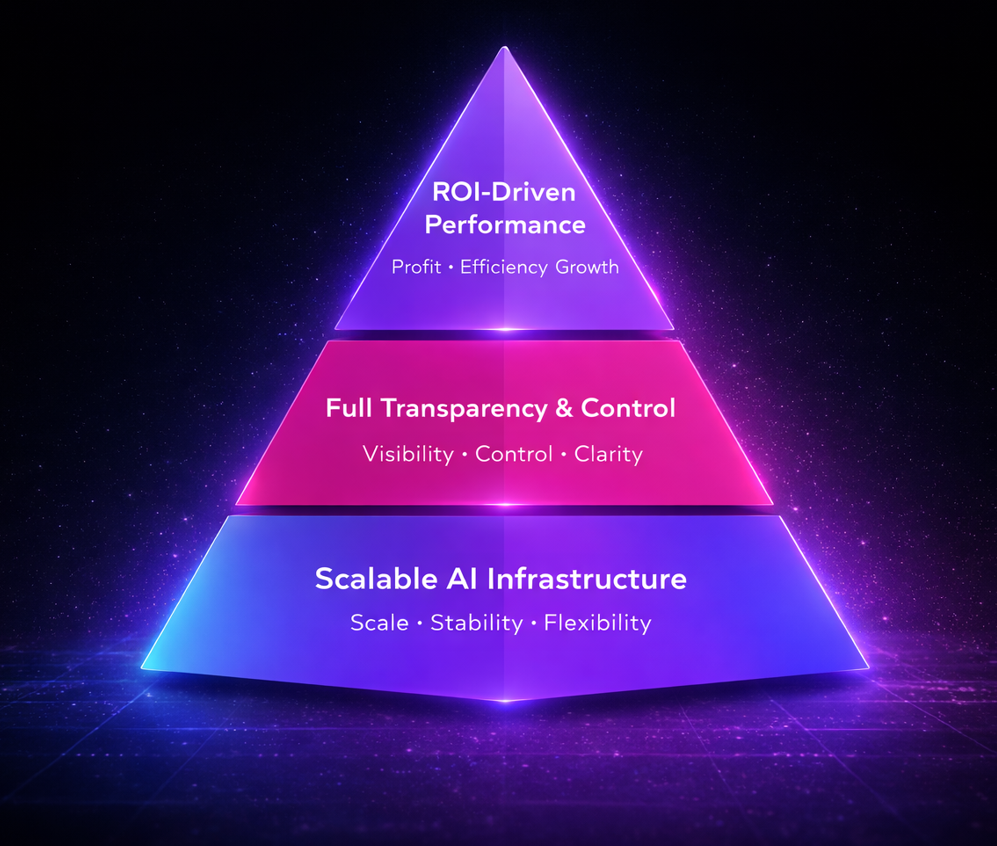
Combining enterprise-grade engineering with deep business understanding, Omnicode AI delivers solutions that maximize ROI, ensure full transparency, and give you total control over operations.
As your strategic AI partner, we implement scalable systems that drive efficiency, reduce costs, and outperform traditional and off-the-shelf approaches.
Request an AI Audit
Speak with an AI expert today to see how practical AI solutions can transform your business